
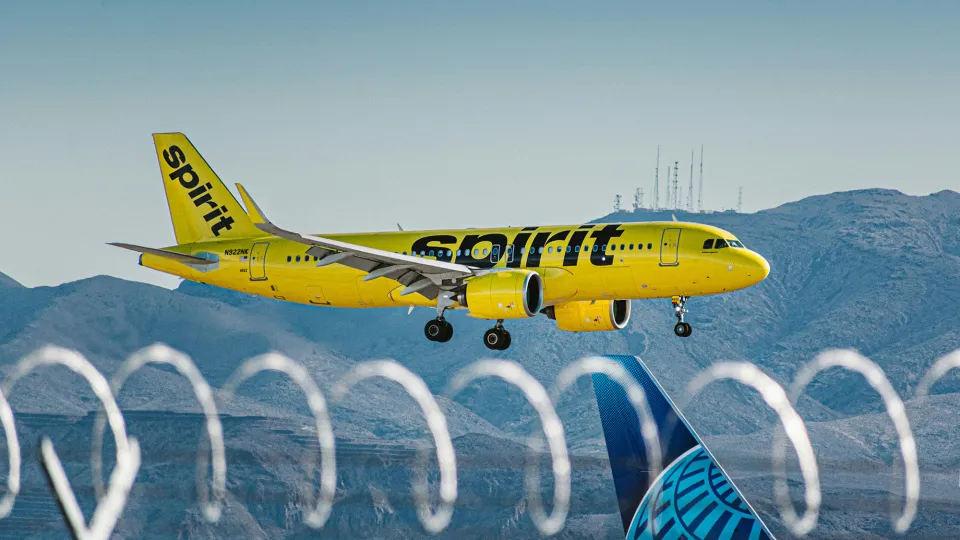
No More Yellow Planes: Spirit Airlines Cancels All Flights and Winds Down Business
Spirit Airlines is shutting down after more than three decades in the air, bringing an abrupt end to one of the most recognizable low-cost carriers in the United States.
The company said it has begun an orderly wind-down of operations, effective immediately. All flights have been canceled, and passengers were told not to go to the airport. The move follows failed efforts to restructure the business and secure additional funding, including a proposed government-backed rescue deal that ultimately collapsed.
In the hours after the announcement, many customers learned the news overnight. Passengers reported receiving emails and app notifications about canceled flights and refunds in the middle of the night. Some still arrived at airports early the next morning with luggage, unaware that the airline had already ceased operations.
The sudden shutdown has left travelers scrambling. Spirit says refunds will be automatically processed for tickets purchased directly with credit or debit cards. Those who booked through travel agents are being told to contact them instead. Compensation for bookings made with vouchers, credits, or loyalty points will be determined through the bankruptcy process. The airline also said it cannot reimburse travelers for replacement flights or emergency hotel stays.
Other airlines have stepped in to absorb stranded passengers. United Airlines, Delta Air Lines, American Airlines, and Frontier Airlines are among those offering reduced or capped fares. United alone said it rebooked about 14,000 Spirit passengers within the first 12 hours.
Spirit blamed a sharp and recent rise in fuel costs as the final blow, saying it could not secure the hundreds of millions of dollars needed to keep operating. The airline had reached a restructuring agreement with bondholders earlier this year, but said the spike in oil prices derailed those plans.
Government officials disputed that explanation. Transportation Secretary Sean Duffy said the airline had been in financial trouble for years, pointing to multiple bankruptcy filings and a business model that was already under strain. By the time of its first bankruptcy filing in 2024, Spirit had lost more than 2.5 billion dollars since 2020 and had already cut thousands of jobs and routes.
The failed rescue effort became a turning point. The Trump administration had explored a plan that could have given the federal government a large ownership stake in the airline, but the deal faced opposition from creditors and never came together. Without new funding, Spirit said it had no viable path forward.
The shutdown is also a major blow to workers. The airline employed thousands, including pilots, flight attendants, and ground staff. Labor groups called the closure devastating and urged that employees receive full severance, back pay, and benefits through the bankruptcy process.
For years, Spirit was easy to joke about. The airline built its reputation on ultra-low base fares paired with a long list of add-on fees. The experience became a punchline for many travelers.
Here is one joke.
The CEO of Spirit Airlines walks into a bar and says to the bartender, "Can I have a draft beer?" The bartender says, "Sure, that'll be fifty cents." He replies, "Fifty cents? That's really cheap!" But the bartender continues, "...and it'll be two dollars for the glass, four if you just stand, six if you want to sit down, and three dollars each time to use the restroom."
The humor stuck because it reflected how Spirit priced its service. The ticket got you on the plane. Everything else came at a cost.
Still, the reality was more balanced than the jokes suggested. Spirit played a significant role in making air travel more accessible. Its a no-frills model that pushed fares lower across the industry and gave many travelers a cheaper way to fly. Even those who never booked a Spirit flight often benefited from the price pressure it created.
That impact is now part of its legacy. With Spirit gone, fewer ultra-low-cost options remain, and that could mean higher fares over time, especially on routes where it once competed aggressively.