
The Coffee Fund: The Cost of Everyday Habits
Most of us have heard some version of this financial advice before. If you stop buying lattes, you will be rich. Or the opposite, that skipping coffee isn't going to fix your finances.
They sound like opposites, but they're arguing past each other. Both of those miss the point. Because the real takeaway isn't about drinks or about building a fortune. It's about what happens when small, repeatable decisions shape how money is used over time. Whether it's spent intentionally or just disappears through habit without ever being questioned.
A few dollars don't feel like much in the moment and are easy to ignore. But when something becomes a habit, something you do almost automatically, it starts to add up in a way that's hard to see day to day. A lot of advice like this usually comes with a chart - "If you save this much, you'll have that much." The logic is sound, and the math checks out, but it still feels abstract. Hypothetical.
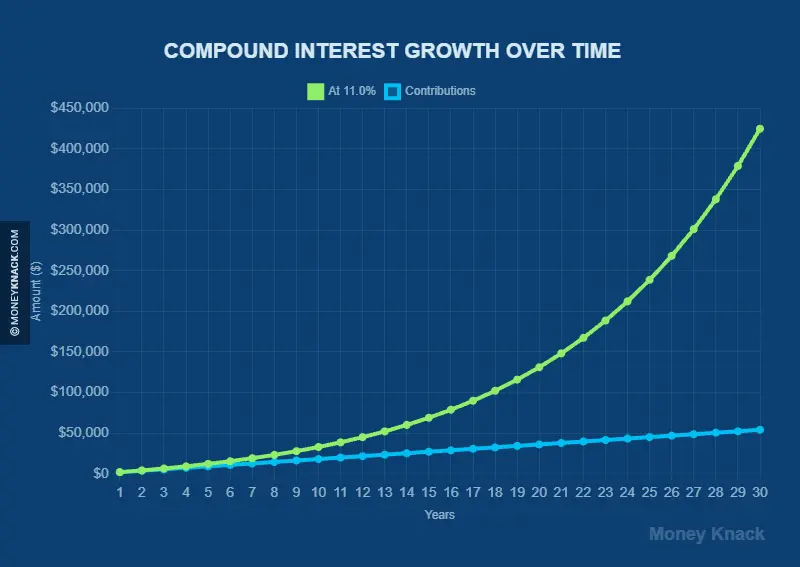
I've sold the idea the same way. But this time, I wanted to make it tangible. Instead of showing projections or hypothetical scenarios, I decided to set this up as a real-world illustration using real money, real market returns, in a real brokerage account.
The idea was to take a small, everyday habit and, instead of spending that money, invest it consistently over several years to show what happens when you take control of a habit that would otherwise just run in the background, and what that kind of repeat spending can actually become over time.
I needed a real-world example. And yeah... Like every personal finance example ever... I picked coffee. It's overused, but it works because it's exactly the kind of expense that's small, frequent, and easy to overlook.
And if it's not coffee for you, it's something else - lunch out, snacks, subscriptions you stopped noticing... The category doesn't really matter, the pattern does. I didn't want anything hypothetical about this, and I didn't want to make up any numbers.
I asked a barista at Starbucks what people order most often at their coffee shop. She told me it's usually a medium-sized coffee, which came out to $3.96 with tax. I also didn't assume this happens every single day. For most people, this kind of spending shows up during the workweek. So I kept it to weekdays.
I made my first contribution on May 16, 2022, exactly five years ago. From that point on, I set it to automatically invest $3.96 every weekday, except holidays, into an S&P 500 ETF. That was the entire setup. Just a small, automatic investment running in the background, the same way a daily purchase would.
What that turns into over time is something called dollar-cost averaging. You invest the same amount on a regular schedule regardless of what the market is doing. Some days you're buying high, some days lower, but you stop trying to figure out the "right" time to invest and just stay consistent.
After the first year, the total was about $910. Around $863 came from contributions, while roughly $47 was growth. Still small. Still easy to dismiss. And for a while, that's exactly what this feels like. A few dollars at a time. Easy to ignore. Easy to forget about entirely.
With the final goal set at five years, and no set plan yet for how to structure the final piece, the project was routinely forgotten for months at a time, until three years slipped past and the balance earned its first comma. By that point, the account had grown to about $3,688.
Around $2,843 was money contributed, while roughly $845 came from growth. That's when the shift starts to become visible. Because those small contributions don't stay separate, the earlier ones have more time in the market, so they start generating returns of their own. Then the later contributions join in. And bit by bit, without any dramatic moment standing out, the balance starts becoming large enough to matter in real life.
Today, five years later, that "small" coffee habit has grown into about $5,784. Around $3,976 is just the money that went in. The remaining roughly $1,808 is growth - money that exists only because those contributions were invested instead of spent. And this isn't abstract anymore. This is money that actually accumulated in the account over time. It could be an emergency fund. It could be part of a car down payment. It's not theoretical. It's available.
I hope seeing it this way feels very different from looking at a chart. Because this isn't a projection or a hypothetical scenario. It's just what actually happened from a small, repeatable habit. And in real life, these don't show up one at a time. It's the combination that ends up making a real difference.
But none of this means you should never buy coffee or anything else you enjoy. If something adds value to your life, it can absolutely be worth it. Not every dollar needs to be optimized.
The real point is that a lot of spending isn't really chosen in the moment. It becomes a habit. And once something becomes automatic, it can run for years without being re-evaluated.
Remember, this isn't about coffee. It's about what your automatic expenses are actually costing you over time, and whether you are still comfortable with that when you see what that money could have done elsewhere. And once you see it through something familiar like this, it becomes a lot easier to recognize how much of spending is just habit rather than intention.
One thing I didn't fully account for is that prices don't stay fixed. I used $3.96 the entire time, but prices for goods and services drift upward over time. In reality, that habit probably would have become more expensive over time, which means the amount invested would likely have increased, too.
That's something I'll keep tracking more carefully from now on. Because this isn't the end of it. The "Coffee Fund" will continue to run. Because the longer the money interacts with the market, the more its behavior starts to change.
The plan is to let the experiment run for another five years, because stretching the timeline toward a ten-year mark is what gradually reveals a very different picture. Market cycles become visible. Growth becomes less linear. And eventually, the account stops being driven mostly by contributions and starts being driven more by time and compounding.
You begin to see how it behaves through downturns, recoveries, and periods where returns are anything but smooth. And that's where something as simple as a small habit starts turning into a much bigger lesson about time.